Undergraduate Research Grants Awarded
December 2, 2025
Photo collage of Undergraduate Research Grant Awardees 2024.
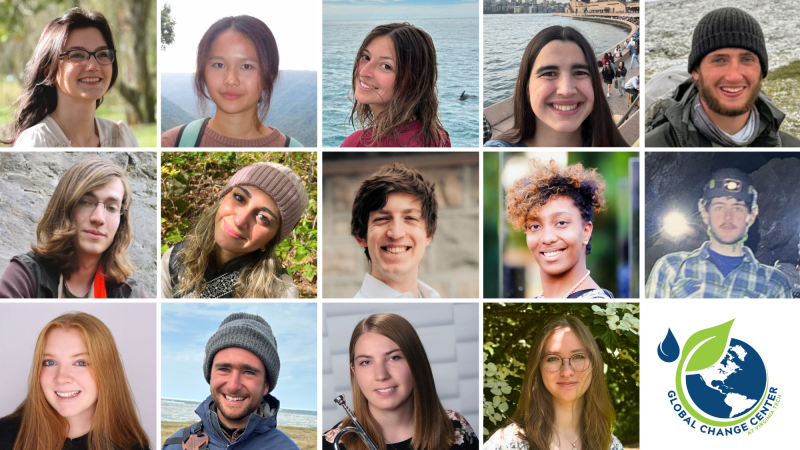
The Global Change Center remains dedicated to fostering the research endeavors of undergraduate students through our Undergraduate Research Grant program. Our 2025 recipients are engaged in remarkable research projects, delving into topics such as climate change, erosion prevention, conservation management planning, parasite behavior, and more, in collaboration with GCC faculty. The research grants for this year, with funding totals at nearly $12,000, are supporting thirteen projects led by fourteen exceptional undergraduate students representing eleven different undergraduate majors.
We extend our congratulations to the following students for being awarded this year's GCC undergraduate research grants!
Resolving the Origins of Trichomonas gallinae in North America
Nia Carroll, Wildlife Conservation
Working with Dr. Luis Escobar
Nia seeks to determine whether Trichomonas gallinae, a protozoan parasite that affects birds, is native or introduced to North America. She will use genetic sequencing and modeling software to determine a time-calibrated phylogeny of T. gallinae strains in North America. These findings could inform future research on host-parasite dynamics and the historical role of disease and invasive species as drivers of global change.
Exploring the thermal biology of the Chagas disease vector Rhodnius prolixus
Shanni Deng, Biochemistry
Working with Dr. Chloé Lahondère
Shanni’s project uses a series of tests to determine how temperature, humidity, sex, and developmental stages impact the thermal preference and thermal tolerance of Rhodnius prolixus, a vector of Trypanosoma cruzi responsible for Chagas disease. Understanding how temperature affects R. prolixus’ behavior and physiology will benefit the prediction of microhabitat selections and potential control strategies of this species.
Assessing High Frequency Sensor Data to Determine Dissolved Oxygen Dynamics in the Duck Pond During and after Dredging
Alejandra Flota, Water Resources, Policy & Mgt.
Working with Dr. Erin Hotchkiss
This project aims to determine how dredging alters dissolved oxygen (DO) dynamics in Virginia Tech’s Duck Pond and assesses downstream implications. Alejandra will also generate time-series plots and summary statistics of DO to characterize changes with dredging. The results of this project could have implications for future stormwater management plans and water resource practices that span beyond VT’s campus.
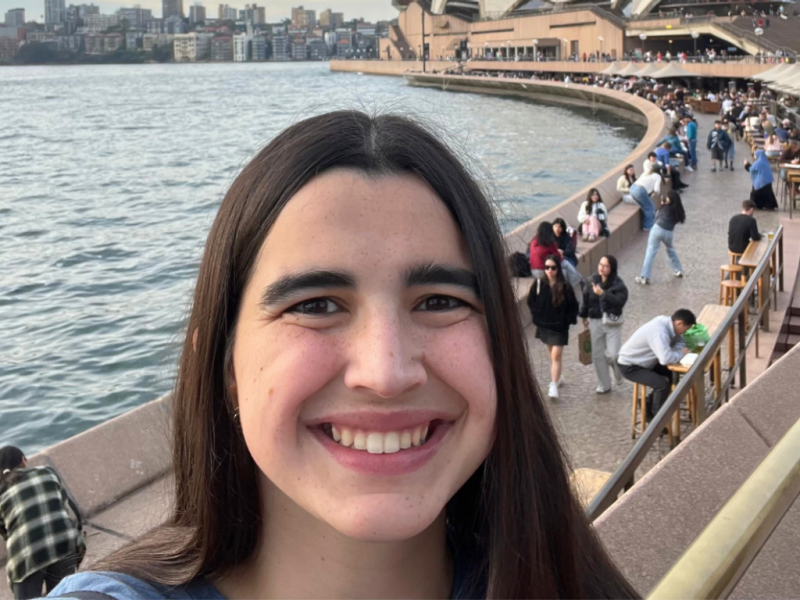
Elucidating enzootic prevalence of Dirofilaria spp. in mosquitoes and wildlife in VA
Emily Haueis, Animal & Poultry Science
Working with Drs. Gillian Eastwood & Roger Ramirez-Barrios
Emily’s project investigates the eco-epidemiology of Dirofilaria (heartworm) species to examine for evidence of enzootic persistence in wildlife and infection in mosquitoes of western Virginia, pinpointing candidate vector species. She expects to uncover evidence of Dirofilaria spp. in VA, the potential role of wildlife species, and the entomological risk from local mosquito species.
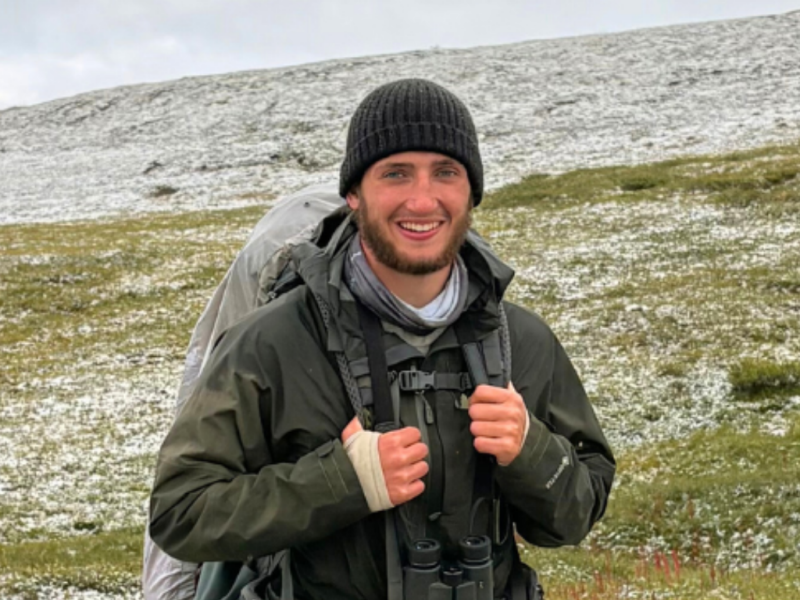
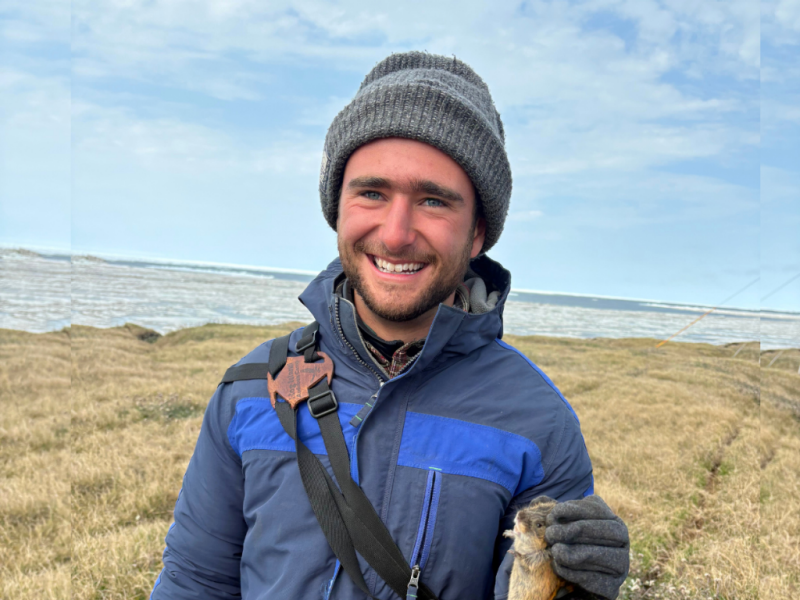
Dietary Niche Partitioning in Mariana White-eyes
Amiel Hopkins & Ezra Staengl,
Wildlife Conservation
Working with Dr. Haldre Rogers
Ezra and Amiel will use stable isotope analysis of feathers and DNA metabarcoding of fecal samples to characterize the diet of Bridled and Golden White-eyes from different islands in the Marianas. While the two species utilize separate microhabitats, they may still have significant ecological overlap, including diet. Understanding their interspecific interactions is important for informing the reintroduction of extirpated bird species throughout these islands.
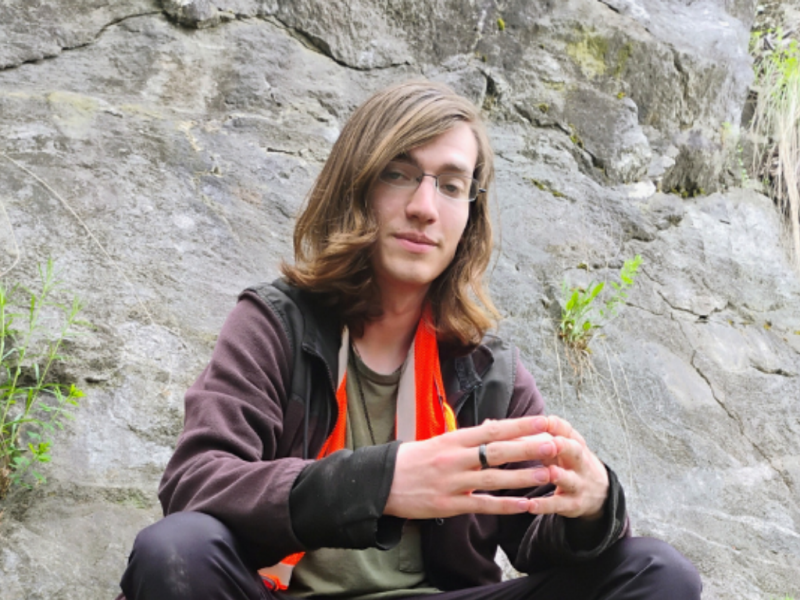
Using Sulfur Contents and Isotopes to Investigate Bat Guano
Michael Loin, Geosciences
Working with Drs. Rachel Reid & Benjamin Gill
Michael will generate a sulfur isotope record from a bat guano core previously retrieved and studied. His goal is to contextualize diagenetic processes; the data generated will help scientists understand the independent microbial processes occurring within the core. This information can be combined with data previously collected from this core to create a more complete picture of both past environments and the integrity of the guano record.
The Effect of Temperature Manipulation on Locomotive Ability Among Differing Groups of Individuals
Natalie Nazemi, Biological Sciences
Working with Dr. Jen Moss
Using salamanders, Natalie’s study explores intraspecific differences in locomotive performance of males and females at different temperatures. She will conduct standardized trials using a mechanized treadmill; water loss will be measured as a cost of activity. The result will be biomechanical data regarding the effect of temperature change on mobility, and whether there are differences between groups in a population.

Improving Streambank Repair by Developing a Recipe for Soil Glue
Keegan O'Hara, Ecological Engineering
Working with Dr. Tess Thompson
Keegan will mix three types of organic matter (OM): sawdust, chopped straw, and hemp hurd at rates of 1%, 2%, and 4% dry weight basis and place it on streambanks. Control soil samples without OM additions will also be prepared and placed on streambanks. Soil erosion rates will be measured in a research flume after 1, 2, 6, and 8 weeks. The data will be analyzed using a 2-way repeated measures ANOVA.

Using Stable Carbon Isotopes to Evaluate the Long-term Environmental History of the Peter’s Mountain Mallow (Iliamna corei)
Nisha Polk, Ecological Restoration
Working with Dr. J. Leighton Reid & Dr. Rachel Reid
Nisha will collect one soil core from the habitat of the Iliamna corei, an endangered plant. Three soil samples at different depths will be taken from this core. The samples will be sent to the National Ocean Sciences Accelerator Mass Spectrometry Lab for radiocarbon dating. At the centimeter scale within the core, she will measure carbon isotope values of soil organic matter. These findings will help site management planning for this plant.
Ecological and Evolutionary Dynamics of Fig-Associated Insects in the Mariana Islands
Nathaniel Salzberg, Wildlife Conservation
Working with Dr. Haldre Rogers
Nathaniel’s research will produce the first reference DNA barcodes for Mariana fig wasps, directly supporting future ecological research and conservation efforts. His project integrates DNA barcoding with long-read Nanopore MinION sequencing to generate high-resolution whole genome data, allowing for whole genome sequences to be identified, even for cryptic or closely related fig wasps.

The Impact of Message Framing on Purchasing Patterns of Invasive Plants
Cecilia Smith, Smart & Sustainable Cities
Working with Dr. Dara Wald
Cecilia’s project studies how messages using moral and risk framing to describe invasive plants shape consumers’ attitudes and purchasing behavior. She will design signage with four different frames (moral care, moral loyalty, risk, and benefit) and conduct a short survey that measures consumers’ attitudes and purchasing behavior. Results from this research will help guide future sign development and serve as pilot data for future works.

Determination of Urushiol Concentrations of Poison Ivy Tissues Throughout a Growing Season
Alia Taylor, Microbiology & Biochemistry
Working with Dr. John Jelesko
Human clinical poison ivy dermatitis is caused by the chemical urushiol. Incidents peak in June and July, then decrease from August until the end of the growing season in October. Alia will evaluate whether this trajectory of poison ivy clinical dermatitis mirrors corresponding changes in poison ivy urushiol levels in the plant by testing various poison ivy tissues (leaves, drupes, buds, and flowers) collected between May and November.
Transformation of Poison Ivy Callus Tissue into Hormone Independent Hairy Roots
Michelle Taylor, Plant Science
Working with Dr. John Jelesko
Michelle’s research will involve various inoculation techniques to wound the callus tissue of poison ivy for Agrobacterium rhizogenes transformation and regeneration of hairy root cultures. She'll also employ the use of several different strains of A. rhizogenes to initiate hairy root formation. These combination treatments will optimize the efficiency of generating transgenic hairy root cultures suitable for functional genomic studies.
-
The Global Change Center at Virginia Tech, with support from the Fralin Life Sciences Institute, is proud to sponsor undergraduate students and their research projects that align with our mission for advancing collaborative, interdisciplinary approaches to address critical global changes impacting the environment and society. Supported projects address basic and/or applied aspects of global change science, engineering, social science and the humanities and are sponsored by a GCC Faculty mentor.